In the summer of 2013, I embarked on a solo backpacking adventure across Northern Michigan. With no one to talk to along the way, my journal became a powerful and necessary companion. I wrote journal nearly every day, sometimes many times a day, to capture the events and insights of my time on the trail […]
Government Can Stop Government Foreclosure
Originally published in the Detroit Free Press
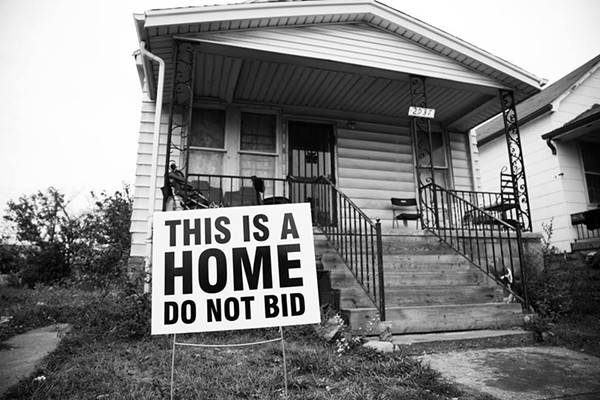
If you’re anything like me, you feel a little sick when you hear that yet another 36,000 Detroit properties are facing tax foreclosure this year. Tax foreclosure is an autoimmune disorder through which our own local government has become the agent of its own destruction. The city, the county and the state all have a role in carrying out tax foreclosure, but they also have the ability to end it.
Prevent the Loss
The first priority must be to preserve homeownership. The most obvious solution for retaining homeowners is to use the federal funds already allocated for foreclosure prevention to actually prevent foreclosure, at no cost to local government.
Each year, the Michigan State Develop Housing Authority, (MSHDA) “Step Forward” program denies assistance to hundreds of applicants who ultimately lose their homes to tax foreclosure. Meanwhile, the funds go unused. MSDHA requirements are too judgmental, stringent and unreasonable for worthy homeowners to qualify, and the application period is too short. Local government should and could aggressively lobby MSDHA to better utilize its foreclosure prevention money for Detroit homeowners, and to increase this funding by returning demolition funds for their original purpose.
Another solution involves the expansion of the so-called “poverty exemption,” which waives taxes for Michigan homeowners with low incomes. This exemption could be extended on a retroactive basis (as with income taxes and the “principal residence exemption”). A retroactive poverty exemption could annul the foreclosures for hundreds or thousands of at-risk Detroit homeowners who are losing their houses for taxes that they could have had waived.
At-risk homeowners need better payment plans. State law limits Wayne County’s options for reducing interest and debt, and over-assessed delinquent tax bills increase at 18% interest each year. One option is the so-called “SEVSPA” plan, a plan that cut tax debt to half the State Equalized Value. This existed under 2015 law passed with the support of Mayor Duggan, but it was only available temporarily at a time when property assessments across Detroit were still chronically over-inflated. We need more common-sense payment plans that reduce debt to some value proportionate to the home’s property value or the owner’s ability to pay. Continue reading
 I’m quite sure that I had never truly prayed before. I know some who did, and swore by it. But most people I know do not pray, and I have never seen a need for it, or felt a calling to it. It was not until I watched with my own eyes as the tree line instantaneously receded from the nearby mountainside like a children’s flip book of the falling of winter changing leaves from green to auburn to a brittle desiccated brown, reducing the work of a month into a few moment’s time, that my mortality shivered in my heart and my mouth dropped open.



 OberDoIt